
The weather is still not exactly compatible with web-related activities, so I didn’t get much done for my websites. But since it’s the 55th anniversary of NASA today, here’s the old Bonzo Dog Doo Dah Band hit Urban Spaceman for Music Monday, remade as a fantastic ragtime tune for Neil Innes’ Book of Records!


 Don’t expect any major website updates from me in the next week – it’s going to be very hot and my brain is next to useless in these conditions. I’ll be posting the usual photos over at the Photoblog, but I’m going to take a break over on DVDLog. I have one major article coming up here, but it could take some time – so, not to let this blog fall asleep, this posting is all about Weather Forecasts on the Web, which are absolutely essential at the moment. Here’s my little collection – of course tailored to my location, but it may be useful for other regions too.
- WDR Wetter – Mainly for Northrhine-Westphalia, but also for the rest of Germany. Fairly accurate and has very useful satellite images and a precipitation radar.
- Wetterkontor – For the whole of Germany, but also useful for local weather and is often more precise than the WDR. The satellite images are not very useful, but the precipitation radar is good.
- Sat24 – Also known as Niederschlagsradar.de, has versions for many countries and very good satellite imagery, but a somewhat antique and chaotic webdesign.
- YR.no – A Norwegian website providing the best satellite images of Europe on the web, with wondefully smooth animation.
These four websites are the best way to get accurate weather forecasts for Germany, but internationally other sites like Accu Weather and Weather Underground are of course better suited. Most of these website also work very well on mobile browsers, but I have yet to find a really good Android weather forecast app. Any comments, ideas or suggestions are welcome either here or in the postings on Google+ or Facebook!
Note: Icon respectfully borrowed from the weather icon collection of MerlinTheRed @ Deviantart.
 Back in May, I posted a bit of a rant after Opera released its new browser generation as Opera Next, which was only a barely-concealed Google Chrome clone. Yes, it was the first browser actually using the Blink engine and yes, it is really fast – but that’s about it. All the great features of the older versions are gone and the user interface is so minimal that there is not even a proper bookmark system.
In June, Opera had announced that they were “working on improving and re-introducing certain features.” and also sort of apologized for having to build a completely new browser, because yanking out the Presto engine out of Opera 12 and putting Blink in was technically not possible. Now it’s July and Opera has deciced to release Opera 15 as a sort of final version – but it seems that my optimism was a bit too premature, because Opera 15 is still exactly the same as it was at the end of May. No bookmarks system save for a barely functioning addon, only a barely functioning speed dial, a “stash” for sites and a useless discover function. No opera:config, no sidebars, no customization. Fortunately Opera 12 is still available, but with this strategy Opera is going to alienate a lot of its users, which are already really disappointed.
And now that Google has updated Chrome to version 28 and finally integrated the Blink engine, the last reason – speed – to use Opera 15 has gone. Chrome is now exactly the same as Opera, has about the same memory consumption, a working bookmark system and much more. It does not have the great user interface of Opera 12, but why use Opera 15 when Chrome does it better? I don’t know what’s going on inside of the company at the moment, but if this trend continues, Opera is going to loose a lot of its relevancy.
My hopes of getting Opera 12 with the Blink engine seem to be too high, so there’s just one thing: use two browsers until Opera gets this mess fixed. I won’t say it may never happen, but who knows?
I actually have no idea who Brandon Flowers is, I only know that his cover of Bette Davis Eyes is the best one I’ve ever heard. It even blows the Kim Carnes version out of the water – this now almost 40-year-old song, originally written by Donna Weiss and Jackie de Shannon in 1974, has never sounded so fresh before.

 Now, what is he blabbering on about now, monkey cages? Well, it’s not my fault that Brian Cox and Robin Ince have called their science-comedy radio series on BBC4 The Infinite Monkey Cage, but since I’ve written about it in a (German-language) article about podcasts before, it’s only logical to mention that the new summer series of six episodes has already begun on Monday and is also available as a podcast on the BBC website.
The radio series has been going on for a few years and most of the back episodes, 37 at the moment are available from the podcast archive. Professor Brian Cox and comedian Robin Ince are talking with their amazing guests about a multitude of scientific themes, but sometimes the discussions end up in a completely different place they started on. It’s fun, it’s interesting and also very educational, but never boring. Advanced English listening skills are of course required, but it’s very much worth it and the half-hour show has just the right length. So hop over to the podcast page, download the new episode or dive into the archives if you haven’t yet!
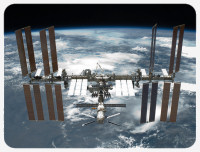 Canadian astronaut Chris Hadfield had been instrumental in bringing human spaceflight back into the limelight, but the phenomenal success of his great outreach work did not please everbody: yesterday there was an article in the German edition of Spiegel Online in which ESA director Thomas Reiter complains about the cult around the International Space Station (English Google-translated version here). He says that too much of the minor and unimportant events like eating, taking photos and making music are thrust into the foreground, while the serious science is being neglected. Reiter stops short of directly criticizing his former colleague Chris Hadfield, with whom he actually played some guitar back in 1995 during a Mir mission as Spiegel Online points out, but his tone is exactly the problem we have here in Germany with everthing science-related: having fun is not allowed, it all has to be serious.
I think Reiter’s comments about Chris Hadfield are not particularly fair, since the Canadian had actually reported a lot about science experiments and the general experience of space flight, always making it clear that it’s not all fun and games on the ISS. There are tons of detailed information available on the web about the science experiments on the ISS, but much of that is of such technical nature that it would be hard to explain to non-scientists – Chris Hadfield had, however, found the right balance between entertainment and seriousness. Calling Hadfields work sensationalism shows that Thomas Reiter might have lost touch with the public – when asked if he would have pursued an “internet career” like Hadfield if the technical capabilities had existed during his time in space, he only answers with a forceful “no”. This reaction is all the more astonishing because Reiter is a veteran astronaut himself, having logged 350 hours in space during two long-duration missions on Mir in 1995 and on the ISS in 2006. He mentions that today’s astronauts have another mentality, but completely ignores that he himself is actually about the same age as Chris Hadfield.
What Reiter is right about is the fixation of the media on the actually rather inconsequential events on the space station, but this is not the fault of the outreach work of the astronauts themselves. But his demand to report only about the serious science is the wrong approach – it’s the fun things of space exploration that will get adults and children interested in science, astronomy and even spaceflight, not the dry and serious science. This is exactly the problem that NASA and ESA have had for a long time – their earlier outreach work has been somewhat dull and only got better in the last few years, but it took an Canadian astronaut to raise even more popularity.
ESA astronaut Luca Parmitano is on the way to become Hadfields successor with his frequent postings on several social networks and he still maintains the same healthy mix of gorgeous photos from orbit, reports about his daily science work and his life in orbit. Yes, there has been some hoopla about ESA’s recently arrived ATV transporter carrying some tasty italian cuisine and that’s another point Thomas Reiter complains about, but the astronauts are not prisoners and their well-being should matter as much as every science experiment. Next year, the German ESA astronaut Alexander Gerst, a civilian scientist, will join the ISS as a crew member – this would be the chance for Germany to step in and do the same great outreach work as Chris Hadfield and Luca Parmitano. The chances are looking good – Gerst has an own website, maintains a Flickr account and is also active on Twitter.
The ISS is not all about science, but also about long-term living in space – while the many scientific experiments are undoubtetly important, we should also not forget that the astronauts are human beings like you and me. Maybe Thomas Reiter has forgotten this.

 Next Monday, July 1st, Google is going to close down its RSS Reader – I’ve written about it before in March and found a temporary solution in May for keeping my Android tablet connected. Since then, a lot has happened, especially regarding the gReader app I’m using to read news on the tablet. The good news is that the program will continue to work next week, but not exactly in the way I had described in my last article in May. It turns out that a local installation of Tiny Tiny RSS is not needed after all, because the programmer of gReader has chosen to work with Feedly, who now not only provides a RSS web reader, but also access for third-party readers like gReader like described in this announcement.
If you use gReader and/or the Google Reader web interface and still need to migrate to Feedly, you need to do the following steps before the end of this week:
• Go to Feedly.com and log in with your Google credentials. No seperate account is necessary, the safe OAuth authencification takes care of that. Feedly will then import all your Google Reader RSS feeds which are then available from the Feedly Cloud web interface and through their API for other external apps. This can also be done by installing the Feedly app on your Android device and logging in with your Google account, but it’s now also possible to do it only via the website.
• For safety and potential importing into other apps or programs, also go to Google Takeout and export your RSS feeds into a file. There is no way of importing this file into Feedly at the moment that I’m aware of, but it could be important for other programs like Tiny Tiny RSS.
• Download the latest version 3.3.3 of gReader from the Google Play Store on your Android device. This version has built-in support for Feedly, which will be displayed on the initial login screen as the bottom option. Just log in as usual with your Google account and your RSS feeds will appear like they did before – only now they’re coming from Feedly and not from Google Reader. This works with both the free and paid versions. The only thing getting lost is the sort order of the feeds, but this can be done inside the app itself.
• Note that gReader 3.3.3 does not have support for Tiny Tiny RSS at the moment. The programmer has chosen to remove this option because of some undefined instability issues, But he is working on a completely new app called News+, which is based on gReader, but will have seperate extensions for access to different services, TT-RSS amongst them. There is only an early beta version at the moment which works only with the phone UI, but the potential is there. It is not yet known if News+ will succeed gReader – at the moment, gReader seems to be the current version, but maybe it will transform into News+ in the future.
So, the future of RSS on Android (and, of course, also on the web) has been saved by Feedly, which is not a bad thing at all. Someone had to be the first to take over and I think Feedly has done the right thing by opening up their API and also providing a slick web interface with the functionality of Google Reader. All this proves one thing: Google was wrong to shut down its RSS reader, plain and simple.
I’ll never get to my long-prepared list for Music Monday if Meri Amber keeps this up, but I’m not complaining – this time she wrote a little song called House Number Three, which is definitively not your stereotypical lovestory. But it involves channeling your inner child, which I’m very much in favour for :-).
 Last week, CosmoQuest held a 32-hour Hangout-A-Thon fundraiser and it was a spectacular, fascinating and enormously entertaining event that resulted in more than $23000 in donations. A couple of days before, Pamela Gay and Nicole Gugliucci had asked a group of regular viewers and commentators if they would like to appear in a segment to talk about, amongst other things, how they found CosmoQuest and what they like most about them. Because I don’t have the technical capability to join a hangout at the moment due to slightly too old computers and a slow upstream, I just joined in via the comments and wrote a short post there. I had promised to write a blog posting about my journey to CosmoQuest, but was not able to finish it in time for the hangout. Now I have, but it has become a bit longer than intended and metamorphosized into this article about discovering science and the state of science news and education in general.
Continue reading »
I was so busy today that I almost forgot about Music Monday, but here’s the wonderful Galaxy Song from Monty Python’s The Meaning of Life in honour of the whole CosmoQuest crew, who raised over $20000 during their amazing 32-hour fundraiser hangout-a-thon this weekend! There’s also the updated Galaxy DNA Song, which Eric Idle recorded last year for Brian Cox’ latest documentary series Wonders of Life.
