

 So on Wednesday, Google made some changes on Google+. Okay, make that a LOT of changes… during the IO Conference a whole lot of updates were announced and to the amazement of many users, were rolled out almost immediately. But while the changes of the user interface of Google+ are drastic to say the least, the new layout is not altogether new – it’s basically the look of the mobile app adapted to the desktop. The multi-column layout is taking a little getting used to, but it actually works quite well. The reactions from the users range from excited to horrified, but the majority seems to like it – and I have to say, that apart from some small issues, I’m also in favour of the new design.
I loved the old user interface of Google+, but after using the Android app about half the time I was wondering how long the actually rather old-fashioned UI would last. A redesign was inevitable, and I think Google was quite successful with it – for a start, it does look like a completely original creation and now has left Facebook firmly behind. I was a bit concerned regarding the rendering speed since we don’t have very fast computers around here, but apart from the expected slight slowdown in Opera, Google+ now even works faster especially in Google Chrome. The user interface now doesn’t feel like a website anymore, but like a real program, especially when you run it in fullscreen. The new layout wastes a bit more screen real estate, but even on my small 1024×768 notebook screen it’s more than acceptable. Apart from the layout changes, Google has also changed the default font to Roboto, which is really easy on the eyes and now consistent with the Android system.
But there are still some problems to be ironed out. Some photographers have complained about the new photo album system and there have been reports that the photo upload is sometimes extremely slow. I’m not a heavy user of the photo albums since I only throw my images in the photos from posts bucket and use the gallery software on my own website, but some users have real issues with the new system, which disrupted their workflow so heavily that they refuse to post any more photos. There is also one grievance that has hit me: when I want to upload a photo – which works now with drag and drop – the posting box becomes so big that I have to scroll down to use the post-button. This only happens on my 1024×768 notebook screen, but it’s still a little bit of nuisance which could be easily fixed with some smaller margins in the post box. It may be possible to fix this with a modified CSS code, but I have not yet looked into a solution for this.
Overall, the new layout is an amazing evolution of Google+ and while the surprisingly fast changeover could have gone better and there are still some teething problems, there is no reason to believe that Google is going to ignore the users. More control over the look of the user interface would be good and there have been some rumours that this is exactly what Google is working on at the moment. The new incarnation of Google+ will surely be even more improved and there is no need to panic or to do a rage quit. After all, Google is offering us a completely free service and while this does not mean that the users are not allowed to complain, there have been a few (understandable) overreactions in the last few days.
Google+ Icon comes from Dryicons.com – much better than the official ones :-).

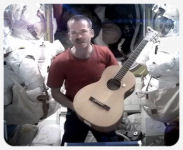 On Monday, three astronauts, Chris Hadfield, Tom Marshburn and Roman Romanenko returned from their half-year-stay on the International Space Station. While two of them were and still are Twitter users, it was especially Canadian Chris Hadfield who had really made internet history by not only sending daily images of earth from space, but also engaging in active social media outreach by filming videos, making music and giving lots and lots of interviews. His farewell gift from orbit, a wonderful cover version of David Bowie’s Space Oddity, has accumulated over 13 million views on the original Youtube video alone. What is even more amazing about his work is that he did it not as part of an orchestrated media campaign, but in his free time mostly all by himself and with the help of his son Evan.
It took a Canadian astronaut aboard the International Space Station to bring human spaceflight back into public awareness – not because he was told to, but because it was his personal choice. Chris Hadfield had actually been up in space two times before – in 1995 he flew with STS-74 to the russian space station Mir and six years later in 2001 he was part of the STS-100 mission to the new ISS, performing two spacewalks with his NASA colleague Scott Parazynski to install the Canadarm2 on the station. He was the first Canadian astronaut to walk in space – but these missions were only eight and eleven days long. His next spaceflight to his long-duration mission on the ISS came more than ten years later and gave him the opportunity to do what had not been possible before on his earlier missions due to time constraints – to share his incredible experience with the world. It’s fortunate that his time in space coincided with the emergence of social media, only five years ago all his efforts may not have been possible in this way.
Since the one half of Expedition 35 has come back to earth, there has been virtual radio silence to the public from the ISS. No more Twitter, Facebook or Google+ postings, no direct words from the astronauts themselves apart from a recent hangout with the actors of the new Star Trek movie. So why isn’t NASA stepping up to continue the wonderful outreach work of Chris Hadfield? There was a short artice in the Washington Post yesterday about this question and the answer was not altogether surprising: the NASA astronauts might not be allowed the same freedom Chris Hadfield has at the Canadian Space Agency, or at least they’re afraid that their activities in their free time might be seen as a misuse of government funds. With the sequester going on in Washington and NASA putting most of its education and outreach activities on the shelf, it’s completely understandable that most NASA personnel, maybe even including the astronauts themselves are not in a position to do much at the moment… but it’s a sad situation nevertheless.
But there is hope: both Karen L. Nyberg and Luca Parmitano, who are launching to the ISS on May 28th are active Twitter users and even now are busy tweeting about the launch preparations. And Chris Hadfield has also not gone silent after the landing – he is still reporting about his recovery process on earth and yesterday mentioned that he still has thousands of unreleased photos left which he is going to share daily. The adventure is still continuing…!

Later today, a group of three astronauts returns from the International Space Station, among them the amazing multi-talented Chris Hadfield, who has shared his experience in space through tweets and posts with photography, video and even music for the last six months. As a goodbye present, last night a wonderful music video of David Bowie’s Space Oddity was posted on Youtube with Chris Hadfield on vocals and guitar – and with video entirely shot on the space station! I actually had chosen something completely different for Music Monday, but I simply can’t resist posting this even if it’s already all over the web by now. Words fail me how completely and utterly amazing this is – it’s like real-life science fiction!
[Update 14.05.: The spacemen are safely back on earth! The NASA already has a great video summary from hatch closure to landing up on Youtube. News articles are all over the place, so I think I don’t need to write a seperate article. I may post something about the importance of Chris Hadfield’s phenomenal outreach work later or in the next days, though.]
 On Monday, Pamela Gay and Fraser Cain recorded the 300th episode of Astronomy Cast – an amazing and wonderful achievement of bringing scientific knowledge to just about everbody. They have been producing the podcast since September 2006 and have covered about every imaginable topic remotely connected to astronomy, but thanks to the scientific universe not being constant, there are still lots of new things to talk about and many older topics to revisit. Also amazing is that Astronomy Cast has spawned into a video podcast since the beginning of 2012 and every episode is recorded as a live hangout before it gets edited into an audio podcast, allowing the listeners to watch how the show is being made.
At the moment, there are 293 audio podcasts available on the website while editing is catching up with the actually recorded episodes. In addition, the latest 55 episodes are also available as video podcasts with an additional half hour where Pamela Gay and Fraser Cain answer questions from comments on the web. Shows 245-247 are available in this playlist (created by me), 248-300 are in the official playlist. The hangouts of the live recording usually happen every Monday at 21:00 CET and the best method to be notified when a hangout is coming is to circle +Astronomy Cast and +CosmoQuest on Google+.
So, why is Astronomy Cast so interesting? It’s not a dry and academic lecture, but the way Pamela Gay and Fraser Cain explain science is also not dumbed down at all, just enough simplified to make everything understandable for non-scientists. Some basic knowledge is, of course. required, as is at least some curiosity about the general subject itself, but their casual and friendly style makes the podcast very approachable, easy to listen to and often even really fun and entertaining. The sheer amount of episodes in the archive may be intimidating for first-time listeners, but the great variety of themes allows for a wide choice and while there is no need to listen to every single episode, I would neverteless recommend it.
So, happy anniversary, Astronomy Cast! May there be at least 300 more episodes in the future – you’ve been and will be an invaluable source of knowledge. Celebrate by listening or watching an episode or two, circle them on Google+ and leave them a nice comment!

 Back in March, the announcement from Google that their RSS reader will be closed down on July 1st came as a big shock and the scramble for alternatives immediately started. I must admit that I’ve been lazy and just sat back for a few weeks to await further developments, but now I’ve found an at least temoprary solution – it’s called Tiny Tiny RSS and is basically an online RSS reader which can be installed on your own webserver. I got interested in it because the programmer of the Android app gReader, which I exclusively use for reading RSS feeds, has integrated support for Tiny Tiny RSS in a new beta version. Tt really works, but also has a few drawbacks.
First, of course, you need your own webspace. The Tiny Tiny RSS website says that shared webspaces won’t work, but I’m on a virtual server and I’ve had no problem installing and running it. Maybe it has something to do with the server load – I hope I won’t get into hot water with my webspace provider, but I don’t think this will put too much strain on the server. Installation is easy – if you’ve ever installed WordPress or some other software package you won’t have any problems following the Install Notes and the automatic, web-based installation routine. The best way is to put Tiny Tiny RSS on its own subdomain and give it its own database, but it can also work in a database with other stuff in it.
The system requirements are somewhat steep, especially the requirement of PHP 5.3, which not everbody has installed yet. My webspace provider All-Inkl.com provides access to PHP 5.3.1 via PHP-CGI – all you have to do is put an .htaccess file with the line AddHandler php53-cgi .php into the root directory of the installation to make it work perfectly. I was able to run Tiny Tiny RSS on the very first try out of the box and I even managed to import my OPML feed list from the Google Reader which I had saved with Google Takeout. The web interface of Tiny Tiny RSS is minimal, but it actually works quite well – and the connection with gReader under Android works perfectly, too. There is actually no difference in gReader between using Google Reader and Tiny Tiny RSS.
There is only one potential drawback, which I have not yet fully explored – updating the feeds. There is no manual method in the web interface, instead the software relies on several different methods to update the feeds. I can’t use the recommended way, updating as a daemon, because I don’t have command line access on my virtual server. I also can’t make manual changes to crontab, but I am allowed to run http-calls as cronjobs – there’s an obsolete, but still working method to do just that. The URL to start the feed update can also be called manually from any sort of webbrowser, even from a tablet. This is not exactly ideal, but the best method I’ve found yet. The best thing would however be to let Tiny Tiny RSS update on an external API call, but that is not (yet?) supported yet.
I have successfully tried out Tiny Tiny RSS with gReader, but because of the feed update issue, I’m still using Google Reader as a RSS source at the moment. If I can get Tiny Tiny RSS running properly on my own webspace, it would be great, but I also would have no problem using another service like Feedly if I can get it to work with gReader. But it’s good to have a fallback method with Tiny Tiny RSS if nothing else materializes when Google Reader goes down in about eight weeks.
It’s Music Monday again, and today I’m posting the video I actually wanted to begin the series with last October. It’s something I found via Google+ – the Ben Folds Five are back together again, there’s a new album and a fantastic music video with some fuzzy guest stars which had been gone even longer than the band itself. One of the most fun music videos I’ve seen in a long time, guaranteed to cheer you up!

 It’s the 30th anniversary of Terry Pratchett’s Discworld this year and it’s time to start some festivities! I have already posted two articles over at DVDLog with three more following in the next weeks, but here I want to write about the books and how I discovered Terry Pratchett myself nearly twenty years ago. Of course this is by no means a complete overview of all things Discworld, but more a personal introduction to one of my favourite authors, which I hope will make others curious about the most creative and intriguing books I have ever encountered.
Continue reading »
To bring a little bit of variety into this website-blog-thingy, I’m going to break with one of my long-time principles not to embed video content: starting today, I’m going to post one music video every week for a new series called Music Monday. Being a little bit of a musician myself, I’ve wanted to do this for a long time and share some of my favourites. I’m not going to upload anything myself, but I’ve set some requirements: they have to be live performances or music videos, not only songs cobbled together with some photos – and of course they have to be playable here in Germany, which makes the search for good music especially difficult because the GEMA-Youtube fight still blocks lots of stuff. I’m mirroring the postings seperately on Google+ and Facebook with the videos directly embedded and a backlink to the blog posting.
The first entry for Music Monday was not on my long-prepared list, but actually came spontaneously. It’s From Me To You, a wonderful little song by the Australian singer and songwriter Meri Amber, whom I’ve recently encountered on Google+. She has a wonderful voice and her songs and videos, available on her Youtube Channel, are amazing, thoughtful, intelligent and funny. She’s also has a great new song called Some Of My Time on triple j unearthed which she is trying to get on radio – please go and vote for her!

 I already wrote about the Opera Browser switching to the WebKit engine a while back in February, but at the beginning of April the story had become even more interesting: Opera is not simply going to switch to WebKit, but will work together with Google on a fork of the open source WebKit code, which is going to be called Blink. This makes a lot of sense and while Chrome and Opera will always remain completely seperate entities, they will be powered under the hood by the same engine adhering to the same standards.
Actually only a part of Webkit called WebCore will be forked to Blink, that actually excludes a Javascript engine, which Google has developed seperately as the open source project V8. This is the engine Opera will also use, and presumably contribute to, in the future. I like Opera because of its unique user interface and features no other browser has, but I must admit that I have been using Google Chrome at the same time especially for Google+ and Facebook, because on my old, but trusty notebook Opera doesn’t render these pages as fast and fluid as Chrome. So an Opera browser with Webkit and V8 inside is going to be very handy for myself, but it’s also going to make the work of web designers much, much easier. It can also be safely assumed that the look and feel of Opera is not going to change much even after the engines have been switched. Only one thing worries me… what is going to become of Dragonfly, the powerful developer tool of Opera? Since this is geared towards the old Presto engine, it might become obsolete.
There have been no Opera desktop versions with Webkit yet, but the Norwegian browser manufacturer has already released three beta versions of Opera for Android with Webkit implementation. These have become amazingly good and are even on low-powered tablets as fast as the old Opera Mobile, but there is still a bit of work to do on the new user interface. There is no bookmark management, only a barely functioning speed dial and progress indicators are still missing – but the rendering speed and low memory usage are so good that I’ve almost completely switched to the new Opera version on my tablet.
So Opera is going to have a very bright future with Blink on the Desktop and presumably also on Android devices. Now I’m anxiously waiting for the first Beta of Opera 14 – they’re going to skip version 13 not because of superstition, but simply to mark the big internal change. Opera has wisely refrained from giving a specific release date – but I’m sure it is going to happen sometime this summer!
As a rule, I don’t do politics on my websites. But this is science threatened by politics: the budget sequestration in the USA has unbelievable repercussions for scientists and educators especially in the outreach sector. Their funding is being cut, which leads not only to less programs and education, but also to job losses. Pamela Gay, who is a Professor at the Southern Illinois University in Edwardsville and the director of CosmoQuest, is experiencing this herself right at the moment. She has been very quiet about this since the news broke that NASA is stopping most of its EPO (education and public outreach) activities, but now she has written a really heart-wrenching article about it.
The work of CosmoQuest is in danger of extinction because of the sequestration. Pamela explains in her article that not only most of what they do, but actually the salaries of her staff are funded by a NASA grant, which is going to be reduced or even cut completely in only a few months. So why should we care? What we see of their activities over the internet is actually only a small part of their work. The CosmoQuest website with the citizen science projects like Moon Mappers, the new educator’s zone and their brilliant hangouts are their most public side, but one of their most important goals is to improve science education in the USA and generally raise awareness for critical thinking, science and astronomy. They don’t want to turn every American schoolkid into a scientist, but at least encourage everyone to get interested on a basic level in science and astronomy.
This is, of course, mainly about the people who are in danger of losing their jobs, but their call for help is far from selfish. Pamela and her colleagues want to go out there and help people to understand and like science, and that’s what really counts. Unfortunately without the NASA funding CosmoQuest as it is today will probably not exist any longer, but this is why Pamela is calling for donations. I could not think of a better project to support and I wish I had the means to do so myself – but even small amounts may help. If you’re not able to donate, help by spreading Pamela’s article and get the word out what’s happening.
CosmoQuest does not deserve to die and while the outlook in Pamela’s article sounds very depressing, I really hope that it’s going to survive and everybody involved will be able continue their amazing work. And they’re not giving up by a long shot!
